You Can't Draw the Same Card Twice
I spent three months building Familiar Tarot. This first piece is about why tarot — and why I'm treating it as my testing ground.
Over the past three months I've built Familiar Tarot — a consumer app rooted in tarot culture. Two things got me started: I'm genuinely drawn to tarot, its system and its culture, and I wanted something to experiment on.
I. Why tarot?
Take this exact moment — why are you reading this? What led you to these particular words? You've probably got plenty else to do today: call your parents to check in, look over your kid's homework, maybe head out on a date you've been looking forward to for weeks. So why are you here, reading my words right now, instead of seeing someone you've quietly liked for ages? Why now, and not this same moment tomorrow, or yesterday? The questions sound pointless — but pointless or not, I still want to ask: why? Forgive the odd little curiosity. Anyway — draw a card below.
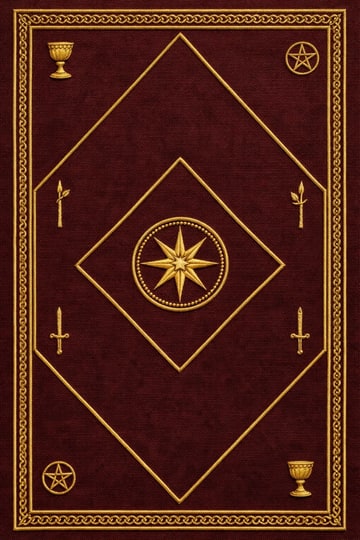
This is exactly why tarot fascinates me as a culture. I'm not really into the occult side of it, but I love what's underneath — the states of life each card captures, and the philosophy of “change” it stands for. Everything is impermanent, arising from causes and conditions, as Buddhism puts it; so cling to nothing. Put another way, most of the people, events, and things you run into in life aren't all that different from reaching for a deck and pulling a card at random.
There's also a natural fit between tarot and AI. A tarot image is tightly structured — every element on a card follows a clear tradition — which makes it easy to turn into a prompt and hand to an image model to render in any style. Woven Arcana is one such deck; I made it with Midjourney in the Rider–Waite tradition. Tarot communities are full of people reinterpreting the cards, too. And every card comes with its own meaning — practically tailor-made for AI, since each one ships with its own context. It's right up AI's alley. No wonder the App Store is so flooded with tarot apps that it's stopped taking new ones.
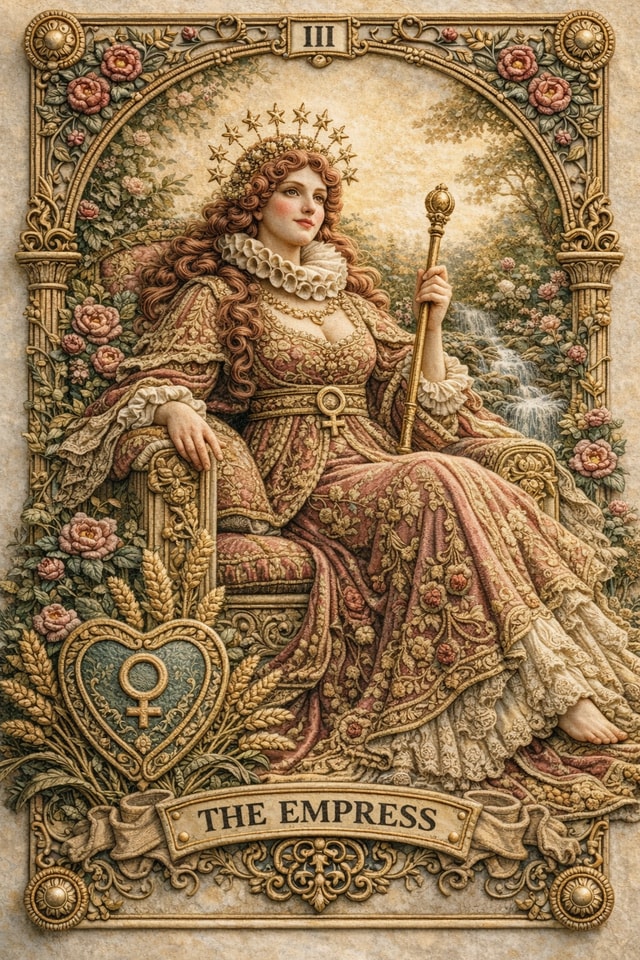 The Empress
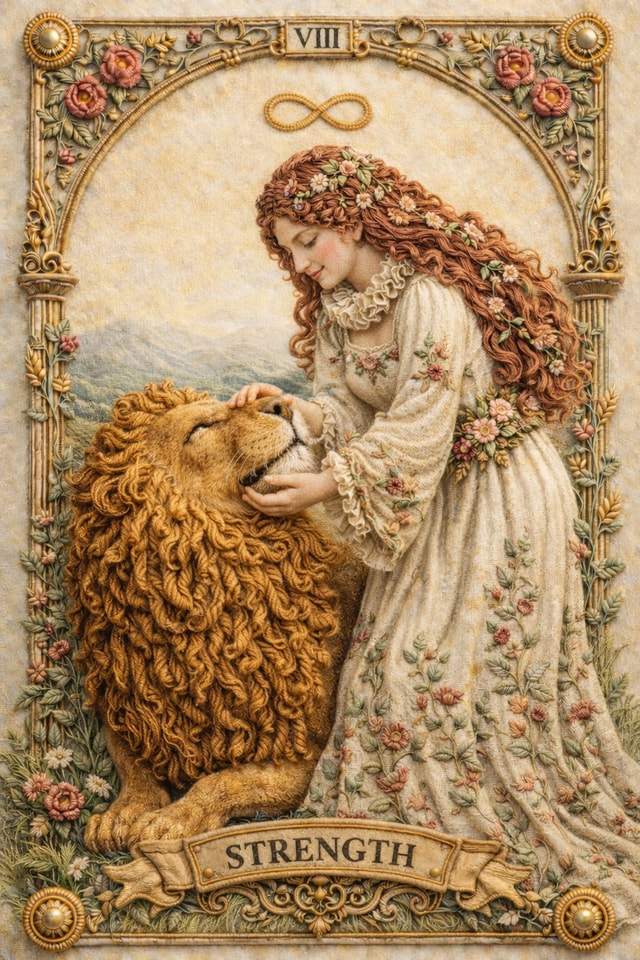 Strength
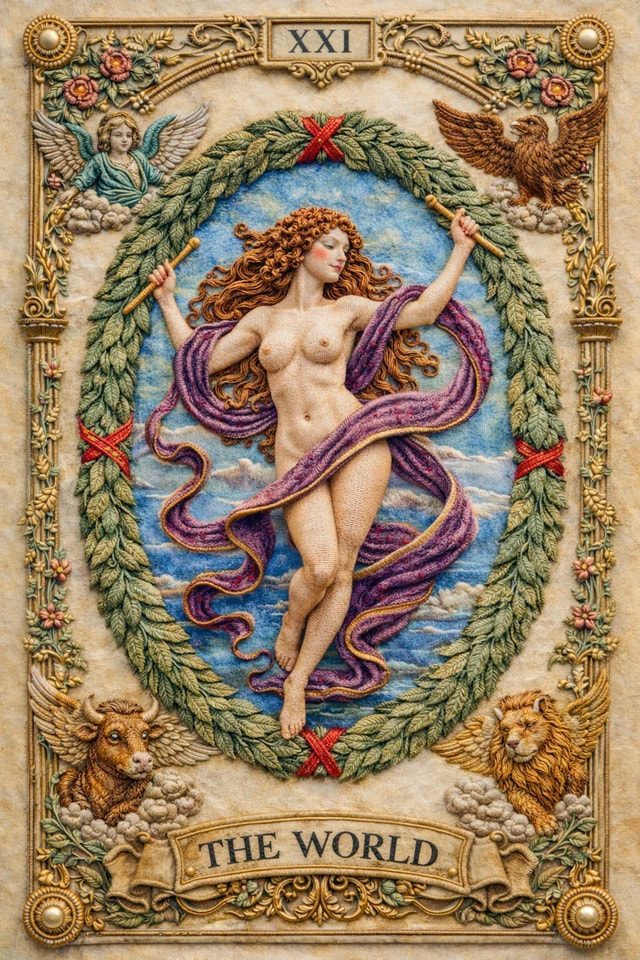 The World
So why build another one? Because I think there's still real room to do something new — it doesn't have to stay stuck in the old draw-a-card-and-divine format. On top of that, the field has built up a huge body of artwork over the years, and as AI image generation keeps getting better, the bar for making tarot keeps dropping. There ought to be a place online to house all that art, paired with the kind of new experiences I described above — and that's why I landed on tarot.
II. Turning it into a testing ground
As I said, part of tarot's culture lines up naturally with what AI can do today. Before this, I only had a shallow sense of how to actually put AI to work — I'd never built a whole product end to end. But this time, with a single theme like tarot to anchor it, I've shipped across iOS, web, and MCP, and pieced together a fairly complete workflow — one that lets me take an idea and make it real inside a week.
I picked up my share of lessons along the way, of course. For one, I poured everything into building the product and lost sight of how the market actually works — I never grew an audience alongside it. Next, I want to figure out how to build that audience with AI. Tarot is still my testing ground.
Stay in the loop
Essays on AI, business, and building products. No spam.